
Join our AllAirCooled VWs Facebook group to connect with other Vintage VW enthusiasts!
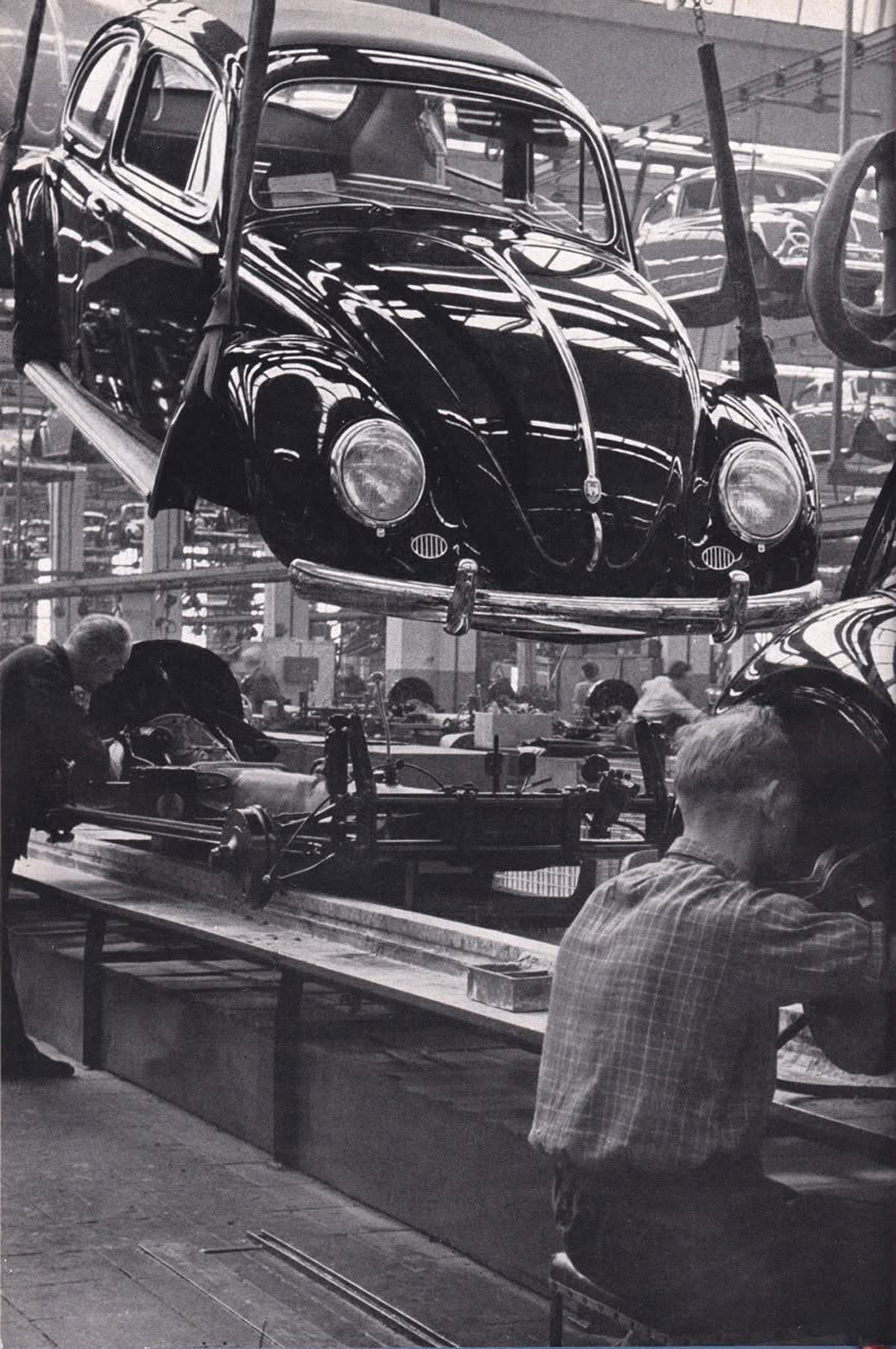 A
completed sunroof Beetle bodyshell, fitted out earlier with glass, trim,
wiring, lighting, bumpers, running boards, locks, etc, is lowered onto
a fully completed chassis platform, suspension, engine and transmission.
All the components come together at this point to form a complete Volkswagen
for the first time and within 20 minutes it will be driven off the end
of the production line.
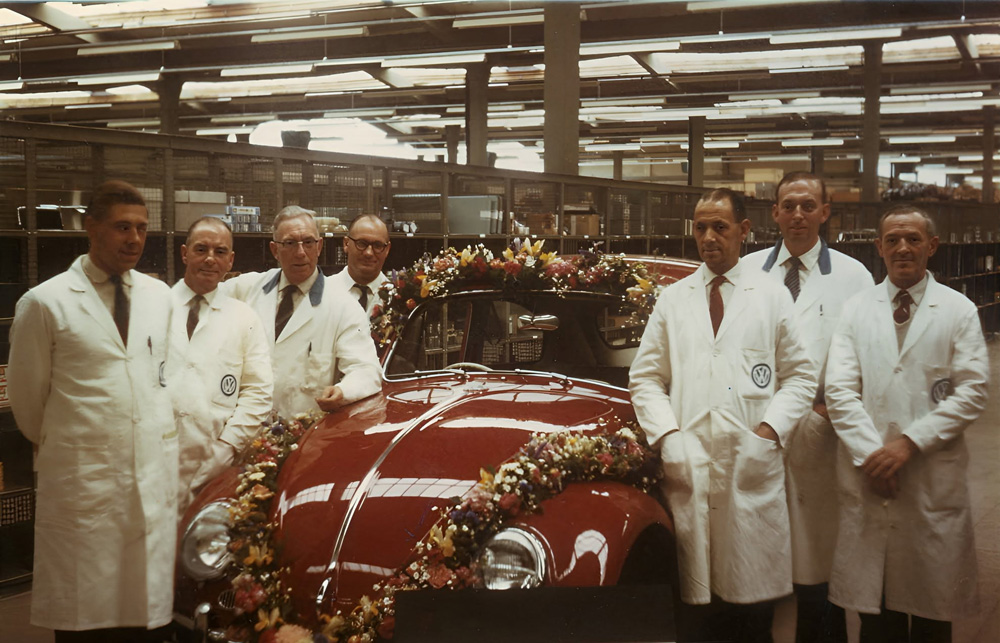 VW 1200 number 100,000 for the UK is celebrated during the summer of 1964.
The location is the distribution centre of Volkswagen Motors Ltd at the
port of Ramsgate on the coast of Kent.
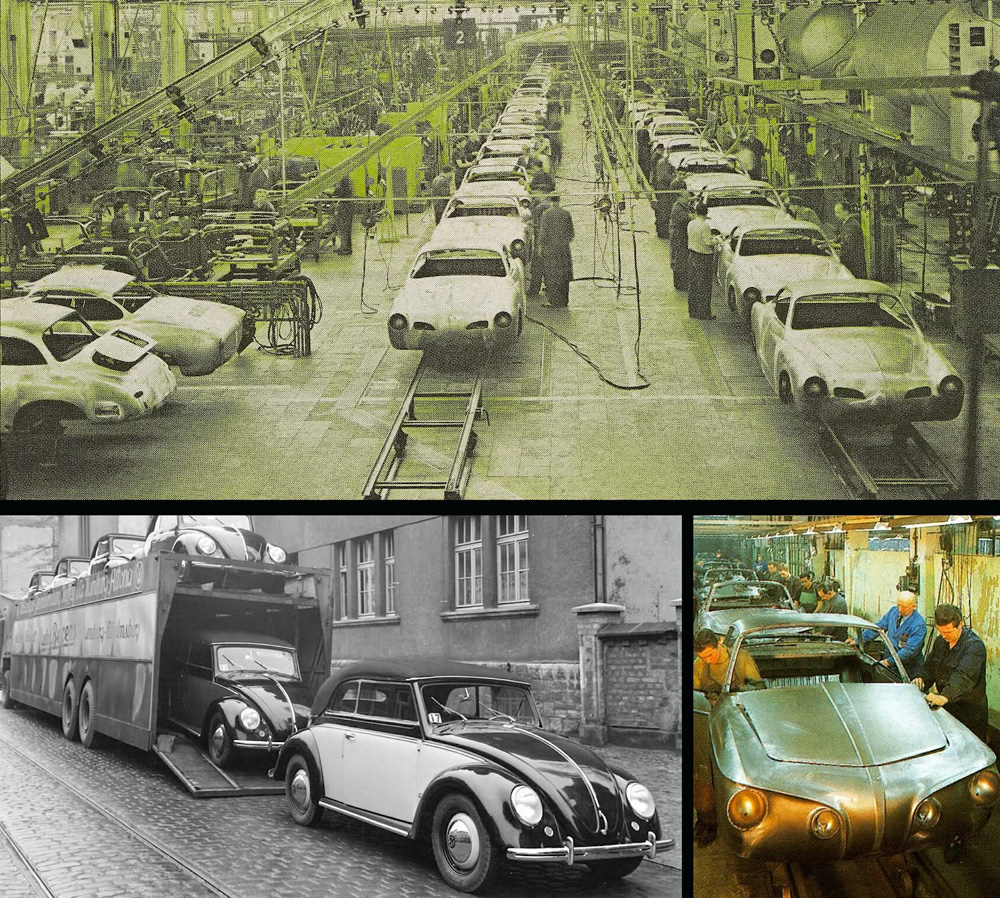 Volkswagen
recently announced that it’s selling the former Karmann factory in
Osnabruck to a defense manufacturer. That was home to the VW Beetle Convertible
(the last few Hebmüller's) and the Karmann Ghia.
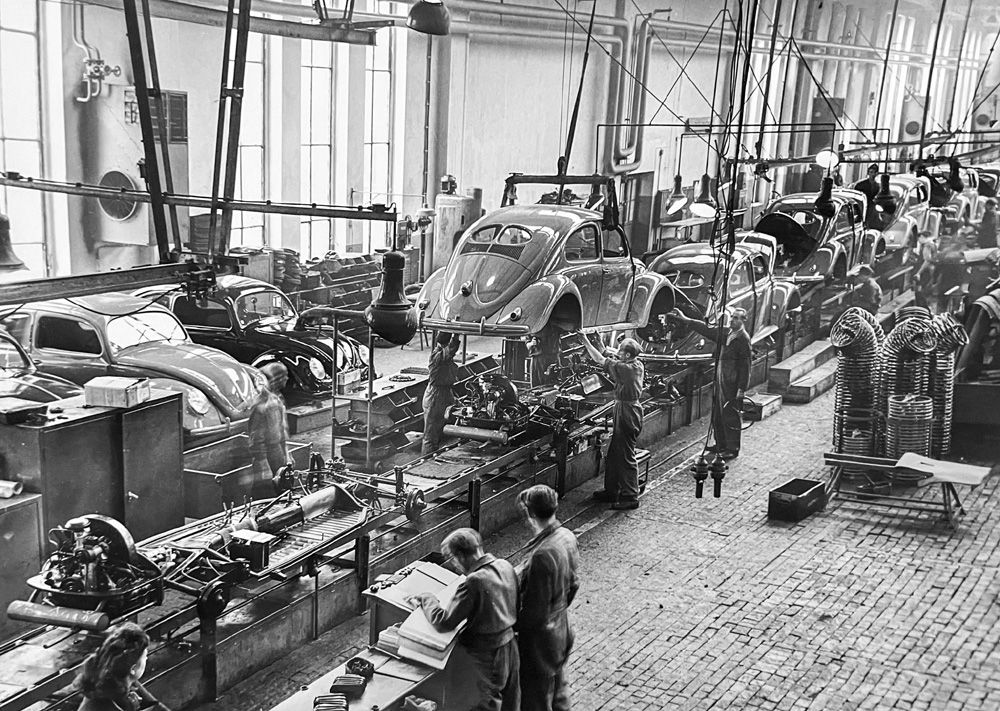 Final
assembly of the Split Window Type 1 at Volkswagenwerk Wolfsburg, around
1950 to 1951. Notice the stacks of steering wheels on the right of the
assembly line.
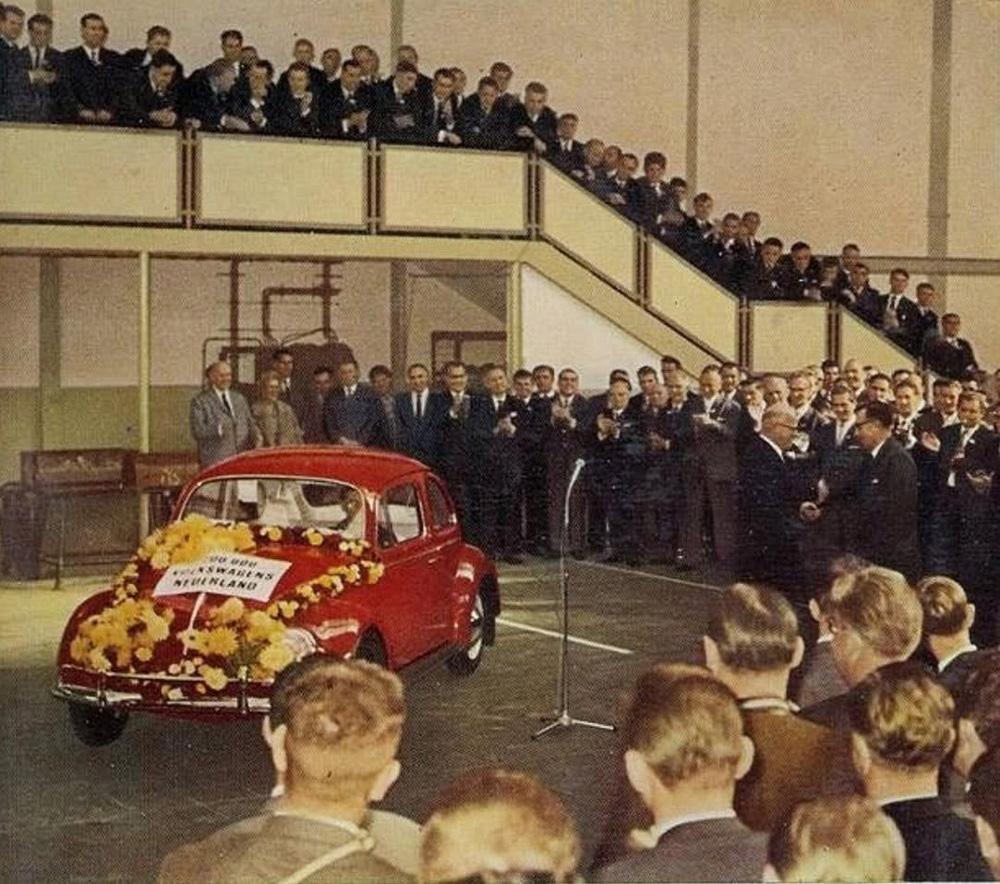 Volkswagen
number 200,000 for the Netherlands was driven off the automated conveyor
ramp from final assembly Hall 12 at VW-Werk Wolfsburg in October 1962
and later celebrated at a special ceremony.
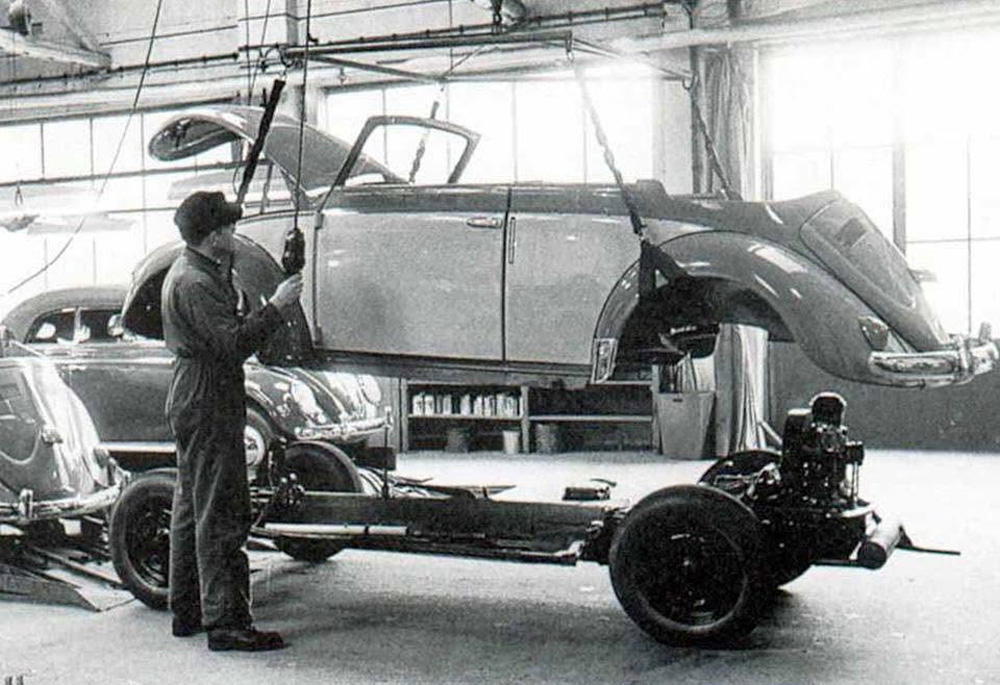 Joining the completed body with the chassis of a Volkswagen Cabriolet
at the Karmann factory during the early days of the model. The roof fitting
will be the final phase of the assembly.
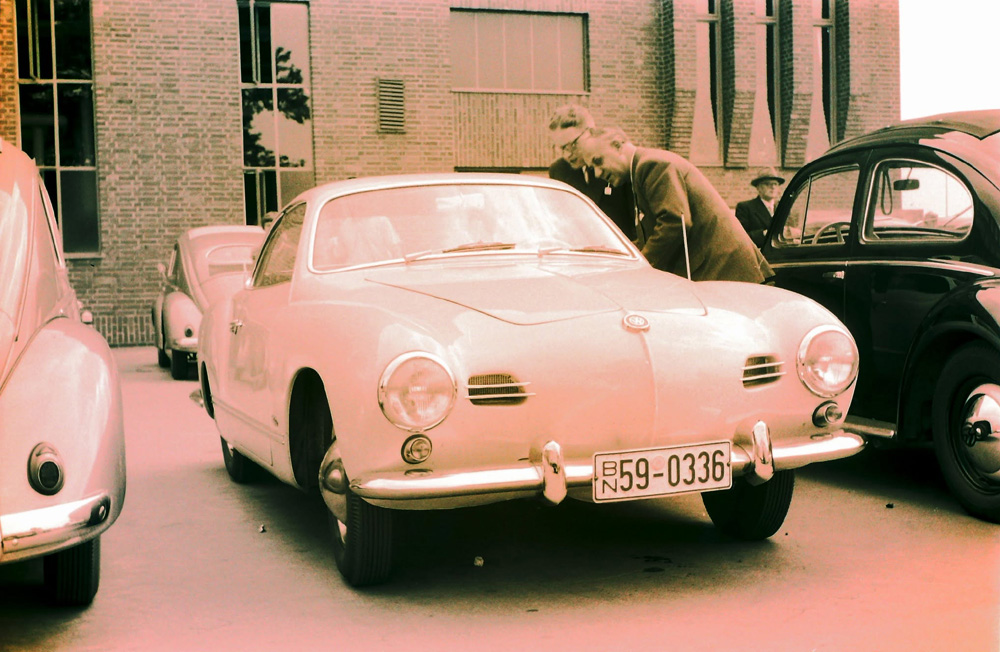 One
of the first Type 14 Karmann Ghia Coupes. Still with old license plate,
the post-war occupation zone system; "BN" stood for Lower Saxony
within the British zone. This system was replaced July 1, 1956 by the
current district-based license plate system (WOB). Photo courtesy of Frank
Kunert.
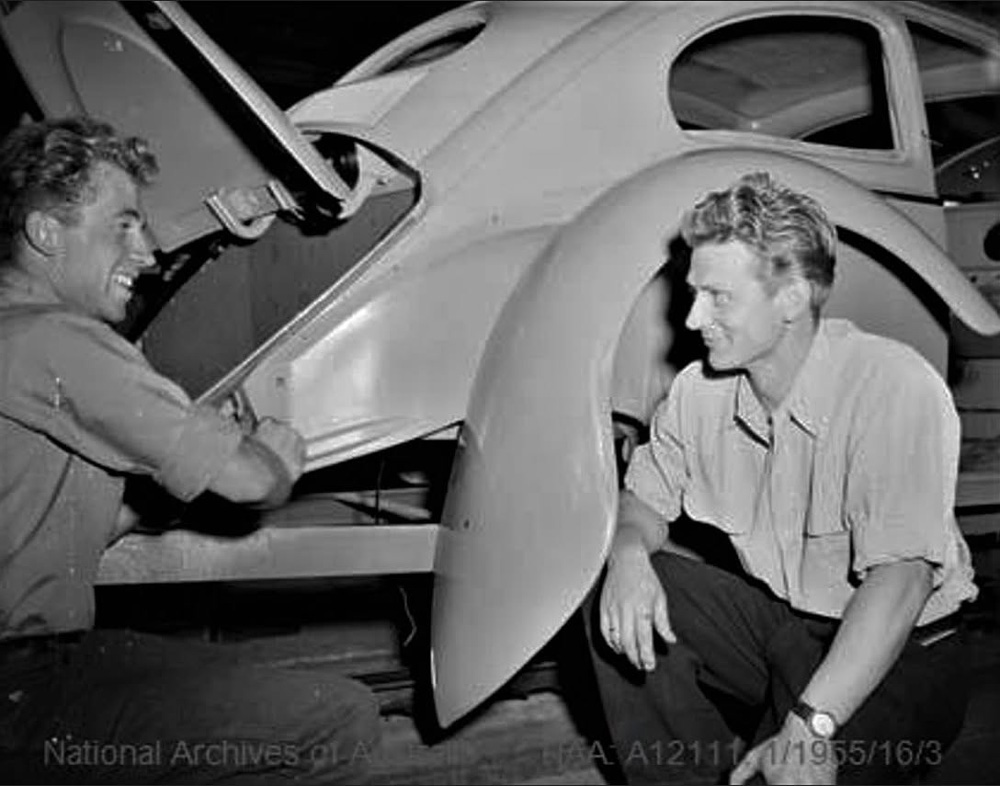 German
migrants in Australia. Working on the Volkswagen trimming line at Martin
& King in Clayton, a suburb of Melbourne, are Willi Futh (right) from
Berlin with Kurt Haidg from Wupperal. Photo from 1955.
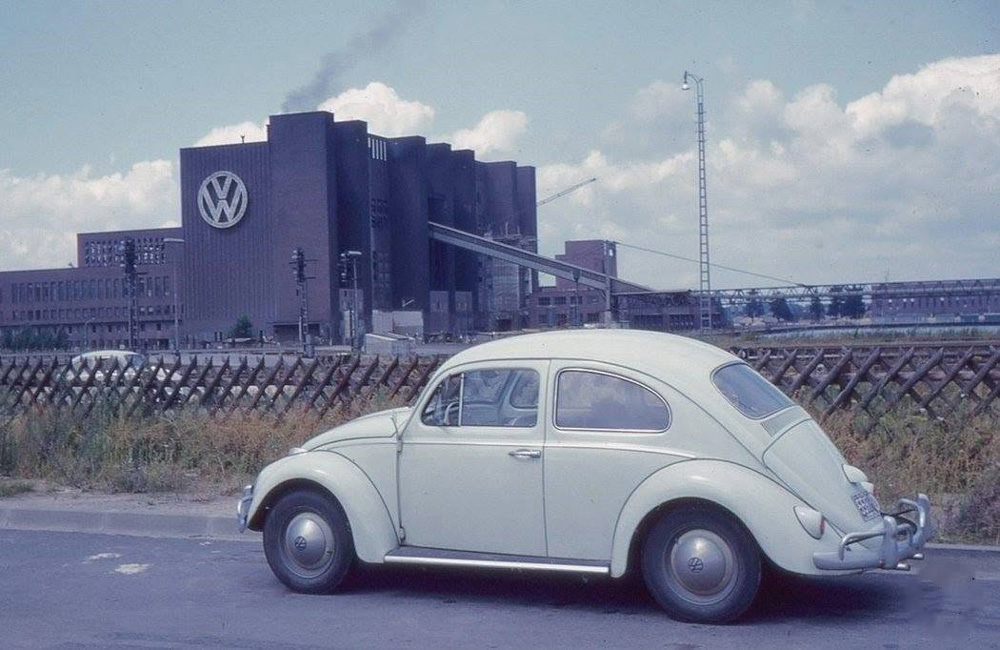 This
VW has an interesting story. It was bought new in June 1960 for the equivalent
of $1200 from a dealership in Heilbronn. The owner George W, was a soldier
in the US Army and you can see the car has a 'US Forces In Germany' license
plate on the engine lid.
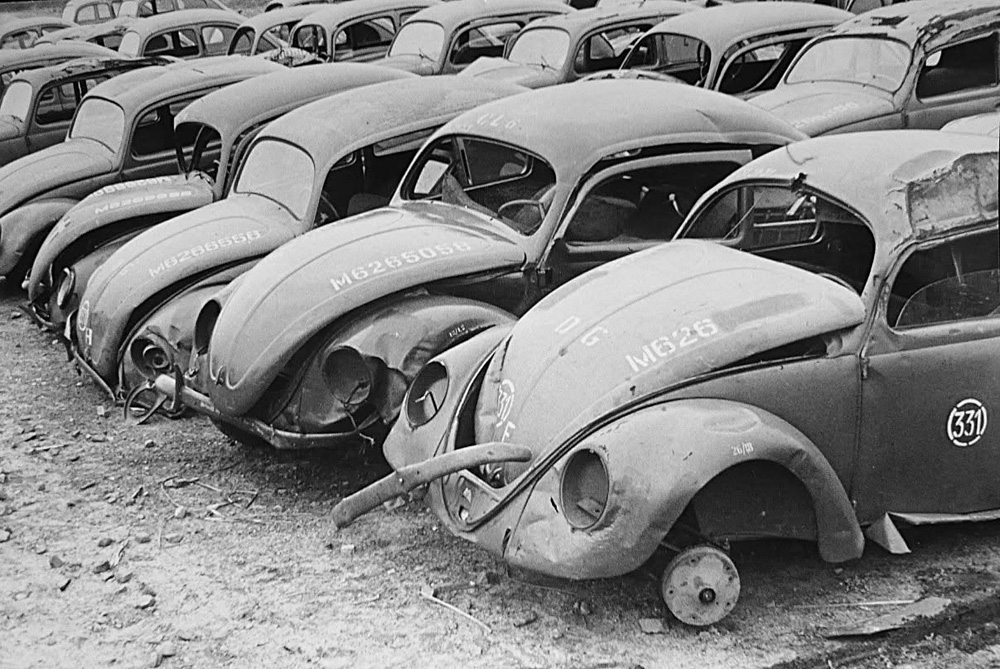 Wrecked
Volkswagens that have been brought back to Wolfsburg Motor Works' REME
workshops for rebuilding/remanufacture in the early post-war years.
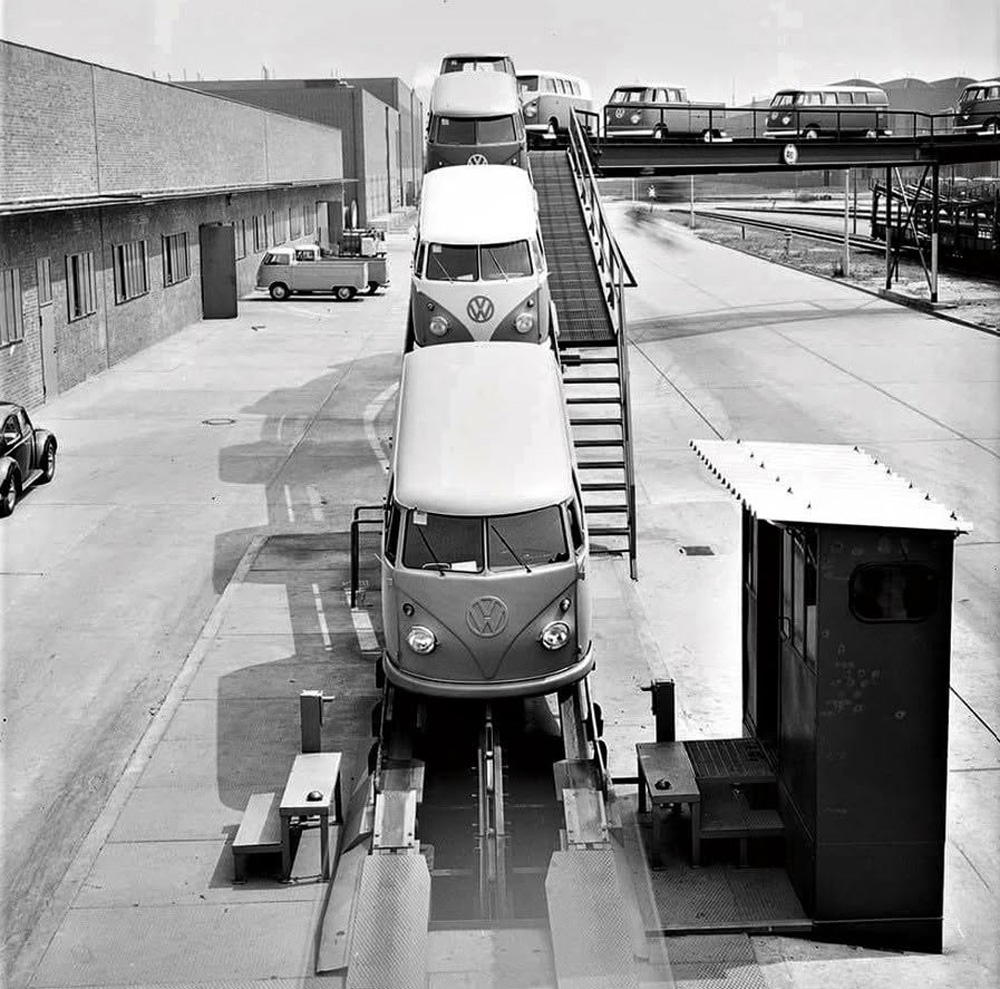 Driverless
Transporters move slowly down the automated conveyor exit ramp from the
final assembly hall at Volkswagenwerk Hannover, passing photoelectric
barriers and emergency stop controls at the base of the ramp. In the left
background stands the factory power station, with the former main substation
below and the steam boiler and generator house rising above it.
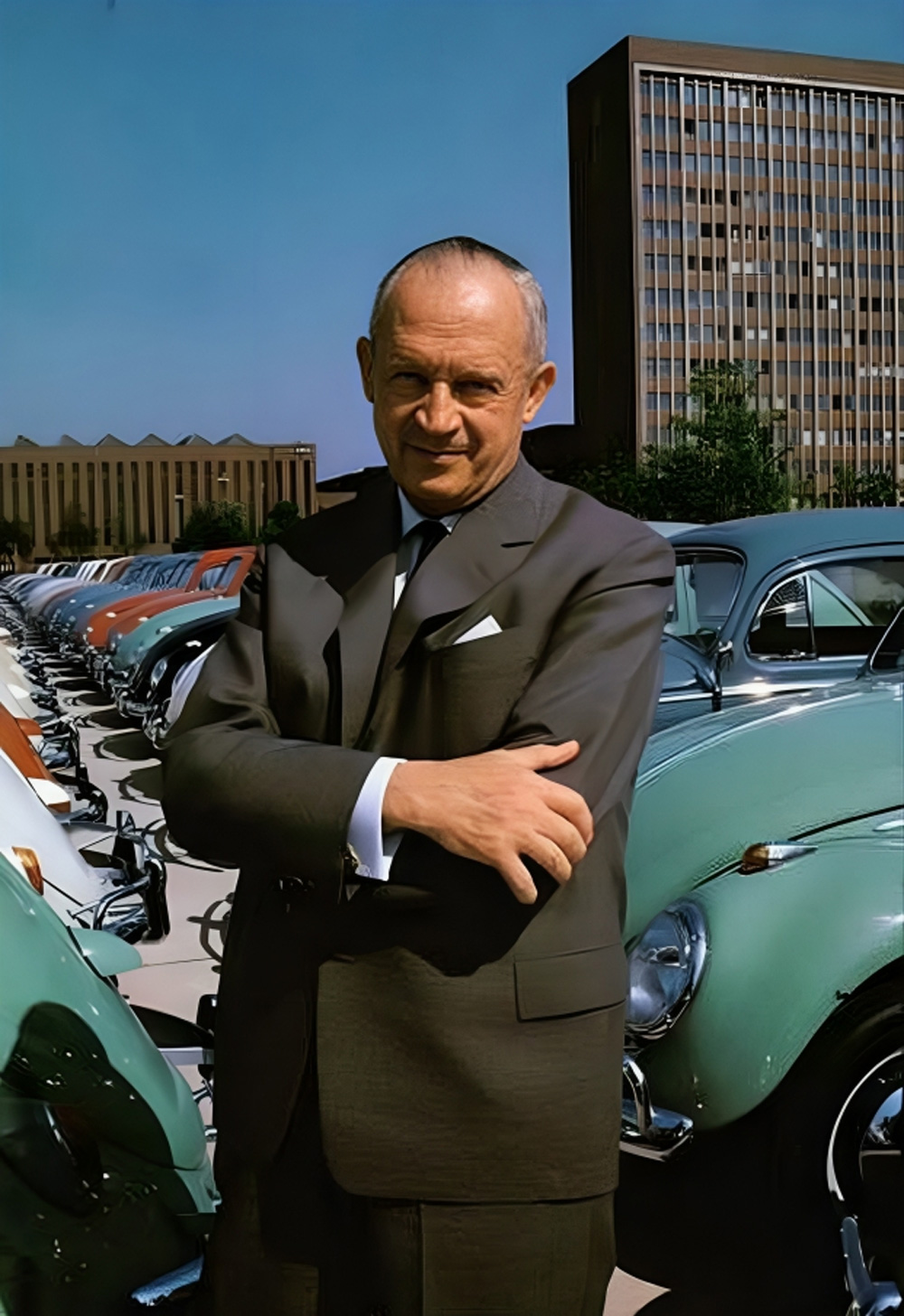 Dr ing E h Heinrich Nordhoff, the first Generaldirektor of the Volkswagenwerk,
is pictured in the grounds of the Wolfsburg factory in the new vehicle
departure yard with the 1959 high rise administration building behind
him. The early 1960s photo by Erich Lessing reflects the period when Nordhoff
transformed Volkswagen into a global automotive leader after taking charge
of the bombed out plant in 1948.
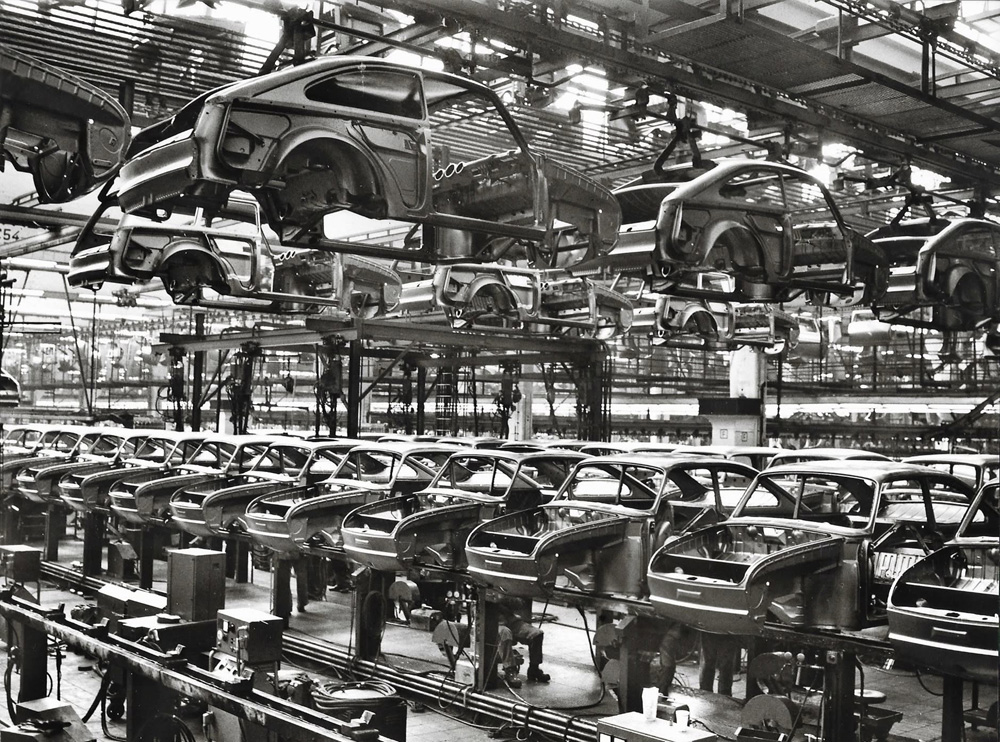 Volkswagen
Type 3 Fastback bodies in white are shown at Wolfsburg on 6 September
1968 as overhead chain conveyors deliver partially completed shells to
the transfer line. The scene captures a key stage in Type 3 production
where front and rear manual welding operations shaped each bodyshell before
final assembly.
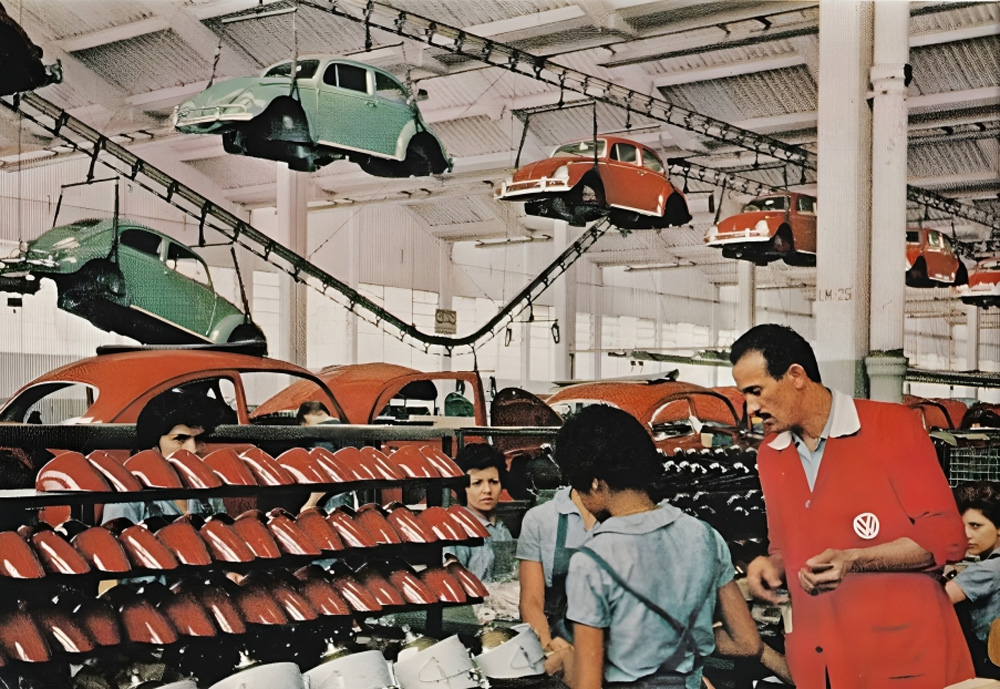 Final
assembly hall at the Anchieta factory of Volkswagen do Brasil in 1962,
showing Fusca production during one of its strongest early years. Over
3 million Beetles were built in Brazil from 1953 to 1986 and again from
1993 to 1996, making the Fusca a cornerstone of Brazilian automotive history.
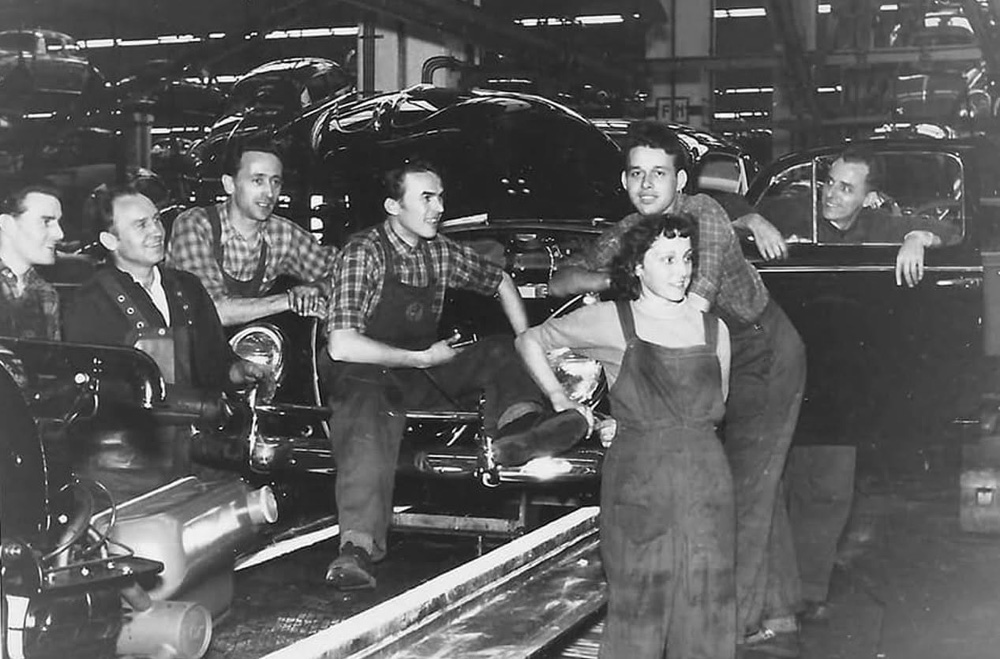 Line
workers pause for a photo at Wolfsburg sometime during the 1960 model
year, capturing a candid moment on the Beetle assembly line. The image
reflects the people behind Volkswagen production during a period of rapid
growth and rising global demand.
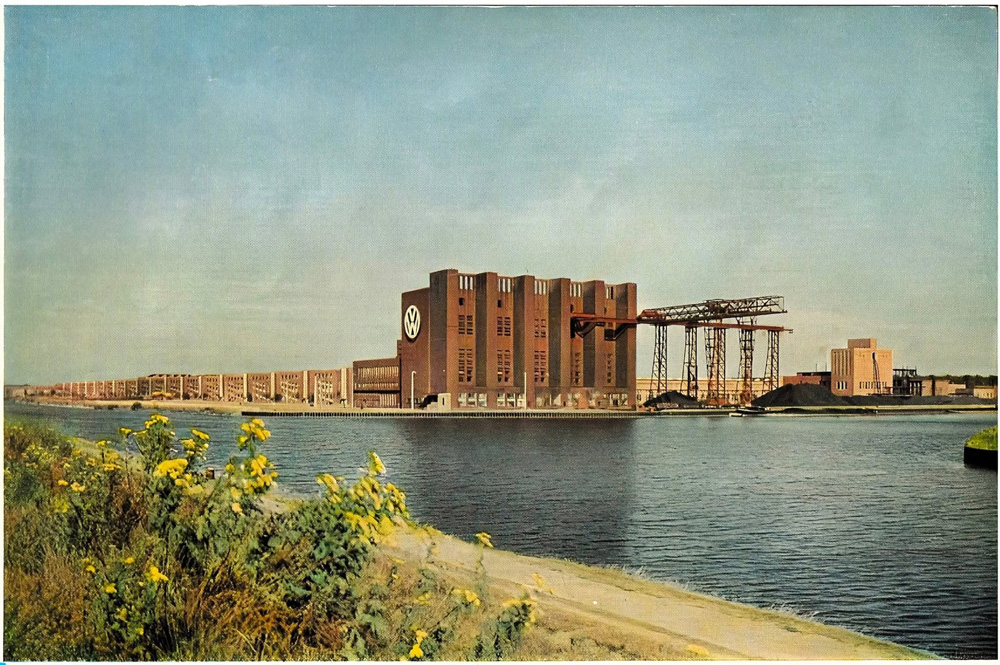 A colourful 1953 view of the Volkswagen factory at Wolfsburg on the north
bank of the Mittelland Canal, dominated by the Heizkraftwerk with its
eight metres wide VW logo first added in 1950. The scene, taken from a
Canadian Volkswagen sales brochure, shows the power station before its
chimneys were added in 1961 and 1966.
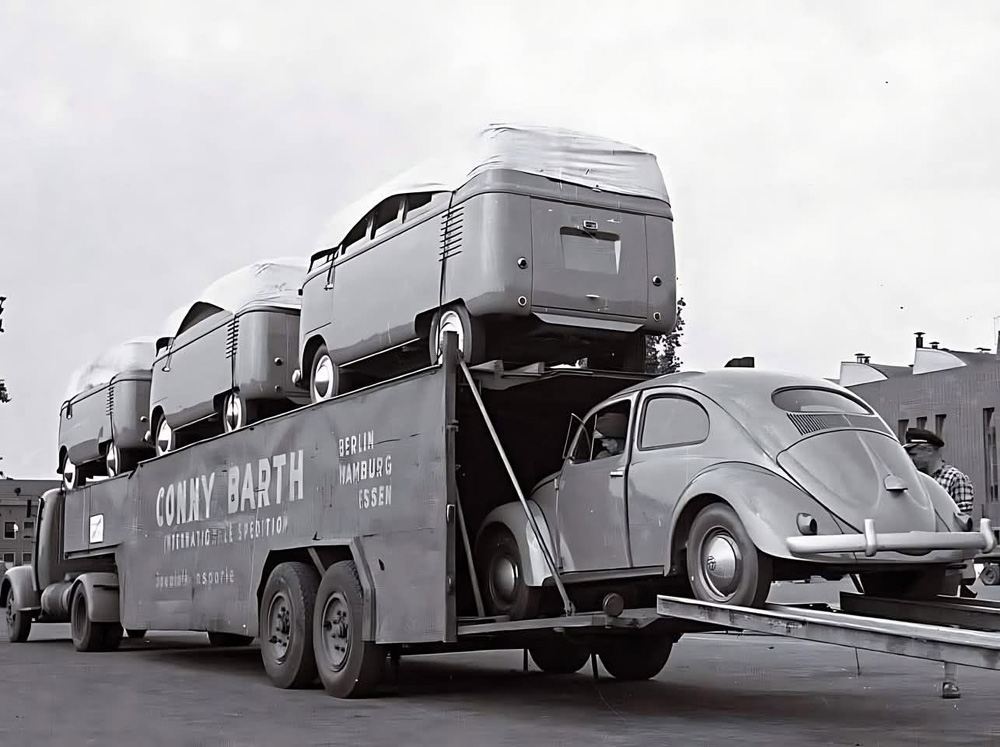 A
rare period photo showing Barndoor buses and an Oval being loaded for
transport sometime in March or June of 1953. It captures an early moment
in Volkswagen history when these iconic models were prepared for delivery
during the first years of Type 2 production.
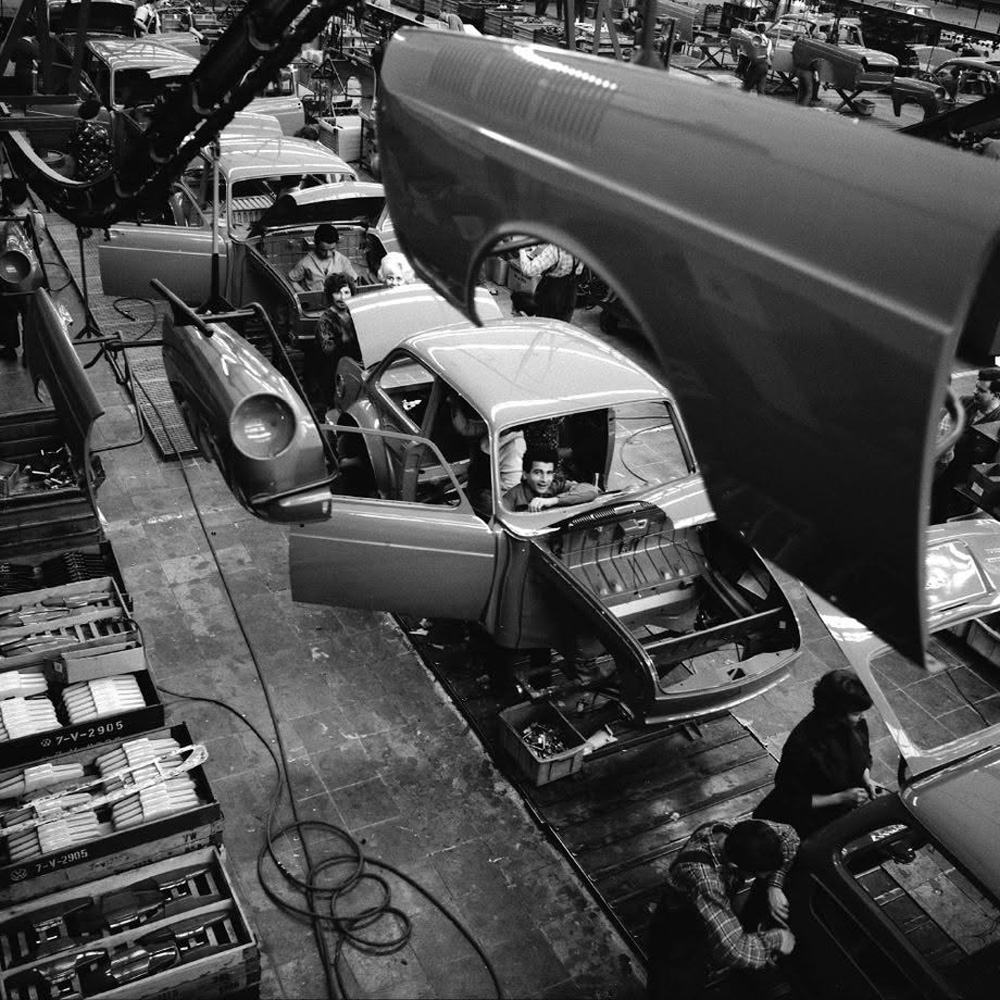 Front
and rear fenders move along an overhead conveyor on the Volkswagen Type
3 assembly line at Wolfsburg in 1966. The photo by Heinrich Heidersberger
captures a precise moment in VW production history as the factory marks
60 years since this scene.
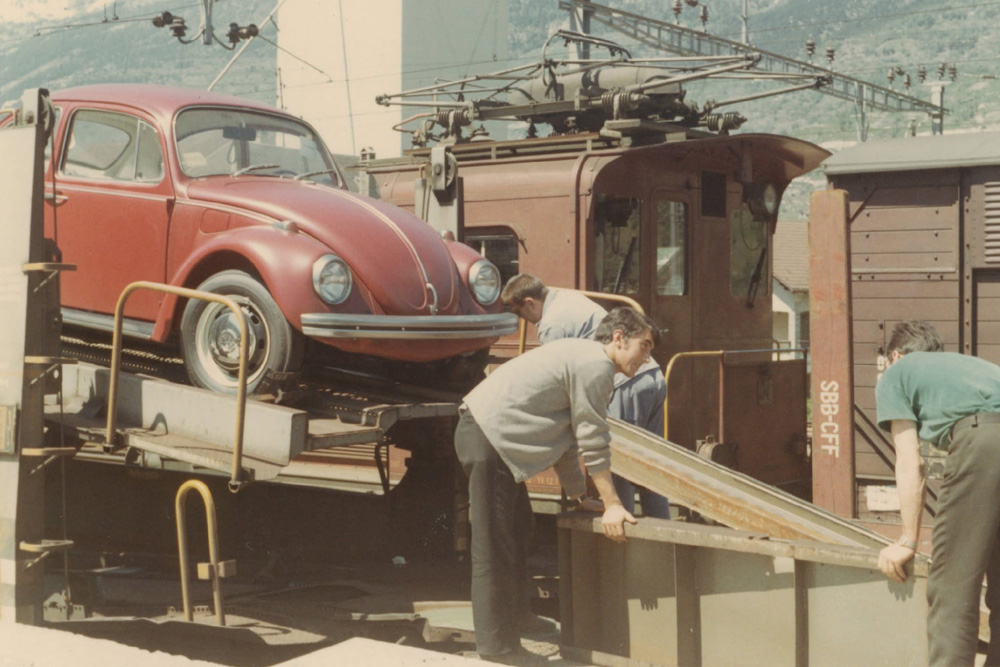 1969
delivery of new Volkswagens arriving at a VW dealership in Visp, Valais,
Switzerland. The photo captures a moment in Swiss VW history as fresh
Type 1 and Type 2 models were unloaded for local customers during a strong
era of Volkswagen growth.
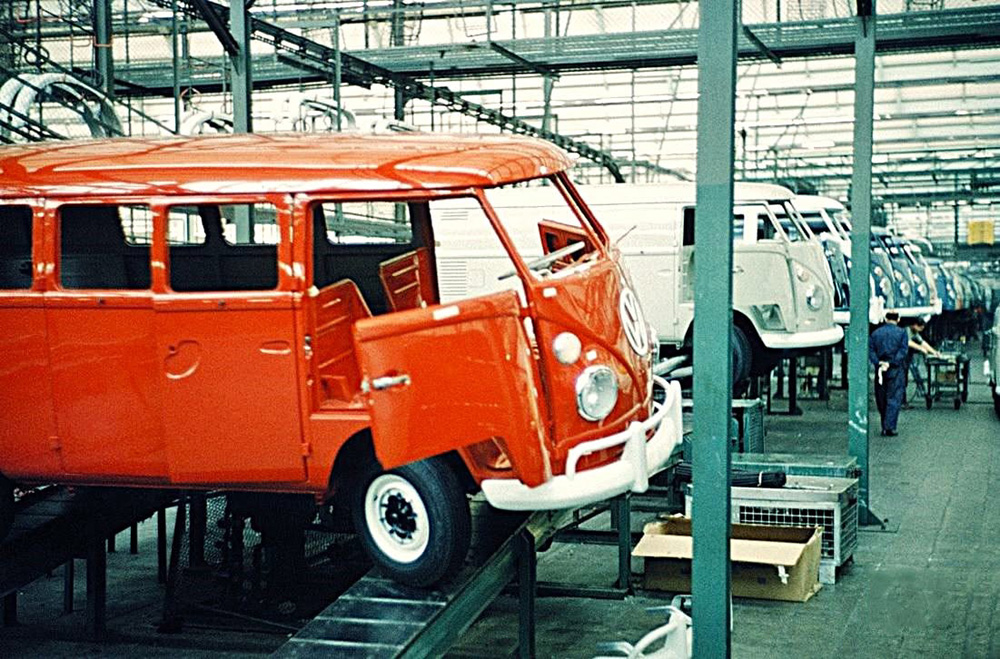 T1
Combi and Panel van Transporters near completion during final assembly
at Volkswagenwerk Hannover in September 1964. The Hannover Stöcken
factory is marking its 70th anniversary, highlighting decades of Transporter
production and VW commercial vehicle history.
Images courtesy of Volkswagen Factory Pictures
Join our AllAirCooled VWs Facebook group to connect with other Vintage VW enthusiasts!

All things air-cooled: follow @allaircooledvws on Instagram for your daily dose of Vintage VW!

@allaircooledvws on X for the ultimate celebration of Vintage Volkswagen culture!
Got a question or comment? Drop us a line and we'll get back to you as soon as we can. We're always happy to talk Bugs, Buses and everything in between!